Case study · Compliance and onboarding

Turning a youth-safety policy into a course staff can actually use

A newly approved policy, eight brand-new reporting tools, and 13 staff across two states who needed to know exactly what to do.

Course cover: Staff Interaction with Young People, Teen Health Academy
CLIENT
Teen Health Mississippi and Teen Health Arkansas
MY ROLE
Lead learning experience designer and developer
FORMAT
Scenario-based eLearning · about 45 min · phone and desktop
DELIVERY
SCORM 1.2 in Litmos
STATUS
Piloted and released, 2026
The problem

A policy that didn't yet live in practice

New staff didn't know the culture or the expectations for working with young people. The policy had just changed: no social media contact with program youth, mandatory reports made immediately, and eight new Monday tools no one had used.

The learners

Same policy, very different days

Two roles work with young people every day. Everyone else might see them a few times a year at events. The course had to work for both groups, on a phone or at a desk, and for people who would rather listen than read.

The solution

Practice the moments that matter

A 45-minute course led by an animated training guide. An original cast faces realistic situations, from late-night texts to disclosures. Staff decide what to do, see why, and leave knowing which tool to use.

Try it yourself

Play the first three lessons

Before you begin, Why this matters and Everyday boundaries, with the guide videos, scenarios and games. Turn your sound on. Internal form links are hidden.

Open full screen ↗
The process

How it came together

STAGE 01 · UNDERSTAND

Listening to the people closest to the work

I consulted leadership on the goals, interviewed the staff who work with young people every day, and reviewed the policy, both states' reporting laws and every new Monday tool. A performance gap check separated what training could fix from what the organization needed to provide.

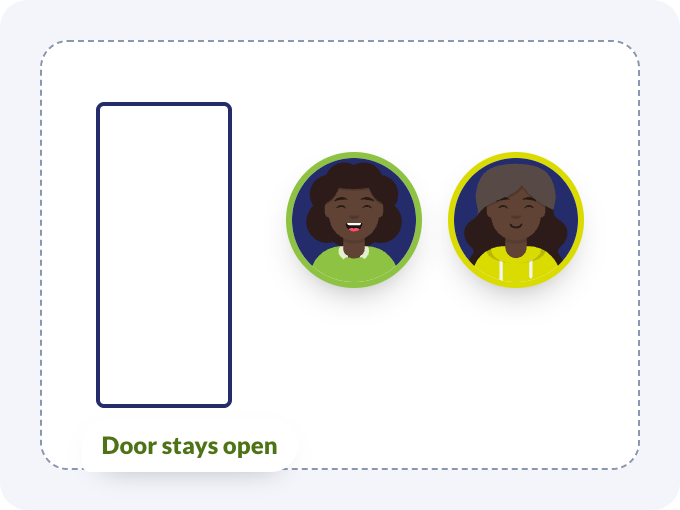
Illustration of a staff member talking with a young person in a program space
THE CAST
Training Guide
Jordan
Taylor
Aaliyah
Marcus
Sofia
Devin
STAGE 02 · ARCHITECT

Mapping every policy section to practice

Personas came from the interviews. I wrote seven measurable objectives and mapped each section of the policy to a lesson and a test item, so no one is held to something they were never taught. The journey and wireframes were planned for Litmos on phone and desktop.

STAGE 03 · PROTOTYPE

A cast and a world to practice in

I built an original illustrated cast instead of using photos of real young people. Animated guide videos have narration and synced captions, and branching scenarios and four light games turn rules into decisions. Each build went through a review round before the next began.

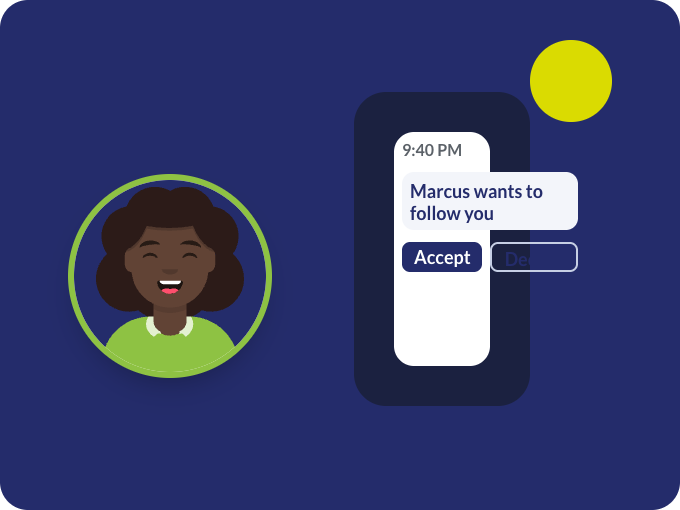
Illustration of a scenario moment from the course
PILOT CHECKLIST
✓SCORM tracking, scoring and resume tested
✓Accessibility check
✓Pre- and post-survey built
✓Pilot with all 13 staff
✓Version 1.1 built from pilot feedback
✓Final version released in Litmos
STAGES 04 AND 05 · VALIDATE AND IMPACT

Tested by the people who use it

All 13 staff piloted version 1 and helped evaluate it. Their feedback shaped version 1.1, the final release now live in Litmos. A pre- and post-survey pairs confidence ratings with scored scenarios, and impact is measured against the Stage 01 baseline.

The full Benchmark Method

Every step and evaluation gate, stage by stage

01Understand
  • Stakeholder consultation
  • SME and key staff interviews
  • Policy, law and tool scan
  • Performance gap check
  • Project Brief
GATE · Problem, learners and success measures agreed
02Architect
  • Personas from interviews
  • ABCD objectives, Bloom's levels
  • Alignment matrix and coverage audit
  • Instructional strategy
  • Journey and wireframes
GATE · Design document review
03Prototype
  • Storyboard and scripts
  • Illustrated cast and scenes
  • Narrated, captioned videos
  • Scenarios, games, 25-item bank
  • SME reviews and SCORM build
GATE · Each iteration reviewed
04Validate
  • LMS and accessibility testing
  • Pilot with all 13 staff
  • Pre- and post-survey
  • Revision log
  • Version 1.1 released
GATE · Learner struggles found and fixed
05Impact
  • Reaction and learning
  • Observation and tool use
  • Completion and recertification
GATE · 6-month impact review
Grounded in Knowles' andragogy Merrill's First Principles Scenario-based learning Mayer's multimedia principles ARCS Trauma-informed design Bloom's taxonomy Kirkpatrick
Challenges

What made it hard, and how I solved it

Challenge · Some staff see young people daily and others a few times a year.
Solution · Recurring characters represent both groups, so every learner sees their own role in the scenarios.
Challenge · The policy changed days before the build, and the tools were brand new.
Solution · The policy owner reviewed every iteration, and each tool is taught right where staff would need it.
Challenge · Abuse and neglect are heavy topics for any learner.
Solution · A trauma-informed tone, a content note before the reporting lesson, and clear support options.
Results

What we're measuring

These are the measures leadership set in Stage 01. Results will be added as the data comes in. Nothing here is estimated.

COMPLETIONWithin 30 days of hireBeing tracked
MASTERY80% pass scoreBeing tracked
CONFIDENCEPre- to post-survey changeBeing tracked
BEHAVIORTool use and observationBeing tracked
Takeaways

Coverage is a promise

If a policy holds people accountable, the training has to teach every part of it. Mapping it first kept the course honest.

Characters carry the story

A recurring cast made hard topics feel human, and kept real young people private.

Learners as co-designers

Treating the pilot group as evaluators turned version 1 into a shared project, not a mandate.

Have a policy or process that needs to become practice?

Start a project →